Index source
AST, imports, modifiers, storage writes, ABI surfaces, instructions, and reachable entrypoints.
 ilold
ilold
MCP-native evidence graphs for EVM + Solana
ilold maps authority, state, value flow, call paths, traces, findings, and fix proof into a domain-specific knowledge graph for smart contract security: an audit evidence graph humans inspect visually and agents query through MCP.
Open source and actively in progress, with EVM and Solana/SVM repos available now.
swap() -> transfer()
functions, roles, storage
auth + state + value
returns path evidence
Current work spans working analyzers and deployable review workflows
Audit workflow
ilold connects the pieces that usually live in separate tools: source, traces, findings, reports, and the fix that claims to close the issue. Every step remains inspectable by humans and queryable by agents.
AST, imports, modifiers, storage writes, ABI surfaces, instructions, and reachable entrypoints.
Authority edges, call paths, state dependencies, value movement, traces, and detector output.
Agents ask precise questions like which public paths reach funds or which signer protects a transfer.
Reports link findings back to source spans, runtime evidence, graph paths, and verified fixes.
MCP-native
Most AI coding tools start by searching raw files. ilold starts from a deterministic security graph. Agents query the knowledge graph through narrow MCP resources and tools instead of rebuilding context from raw files.
tool which_paths_reach_funds()
tool explain_authority("transfer")
tool trace_value_flow("USDC")
tool verify_fix("finding-42")
source spans · traces · graph paths · report proof
Claude Code, Codex, Cursor, and Copilot-style clients can ask security questions through MCP instead of rebuilding context every run.
The same graph is visual: authority, state, value, calls, traces, and reports stay reviewable by humans.
A report item links back to source spans, traces, affected paths, and the proof that a fix closed the route.
Critical assets
Static analyzers are useful for known patterns. The expensive failures are usually violated assumptions: who can call what, which state changed, where value moved, and whether a fix actually broke the exploit path. ilold makes those relationships reviewable by humans and queryable by MCP-connected agents.
Withdrawals, token transfers, treasury movement, accounting deltas, and paths to balances.
Owners, roles, signers, upgrade controls, admin routes, and authorization assumptions.
Storage writes, account changes, configuration, invariants, and dependency edges.
Calls, delegatecalls, CPI, oracles, bridges, token programs, and cross-system effects.
Changed paths, closed exploit routes, regression evidence, and report-linked verification.
Technical architecture
ilold is designed as infrastructure: adapters collect chain and source context, the graph builder normalizes security relationships, the evidence store preserves provenance, and MCP makes the graph available to agents, auditors, CI, and reports. Under the hood, contracts, functions, modifiers, storage slots, signers, token flows, traces, findings, and fixes become typed nodes and edges with source provenance.
source, ABI, traces, instructions, detector output
authority, calls, state, value flow, findings
nodes, edges, source spans, report history, fix proof
visual explorer, MCP server, exports, CI/API
EVM graph engine
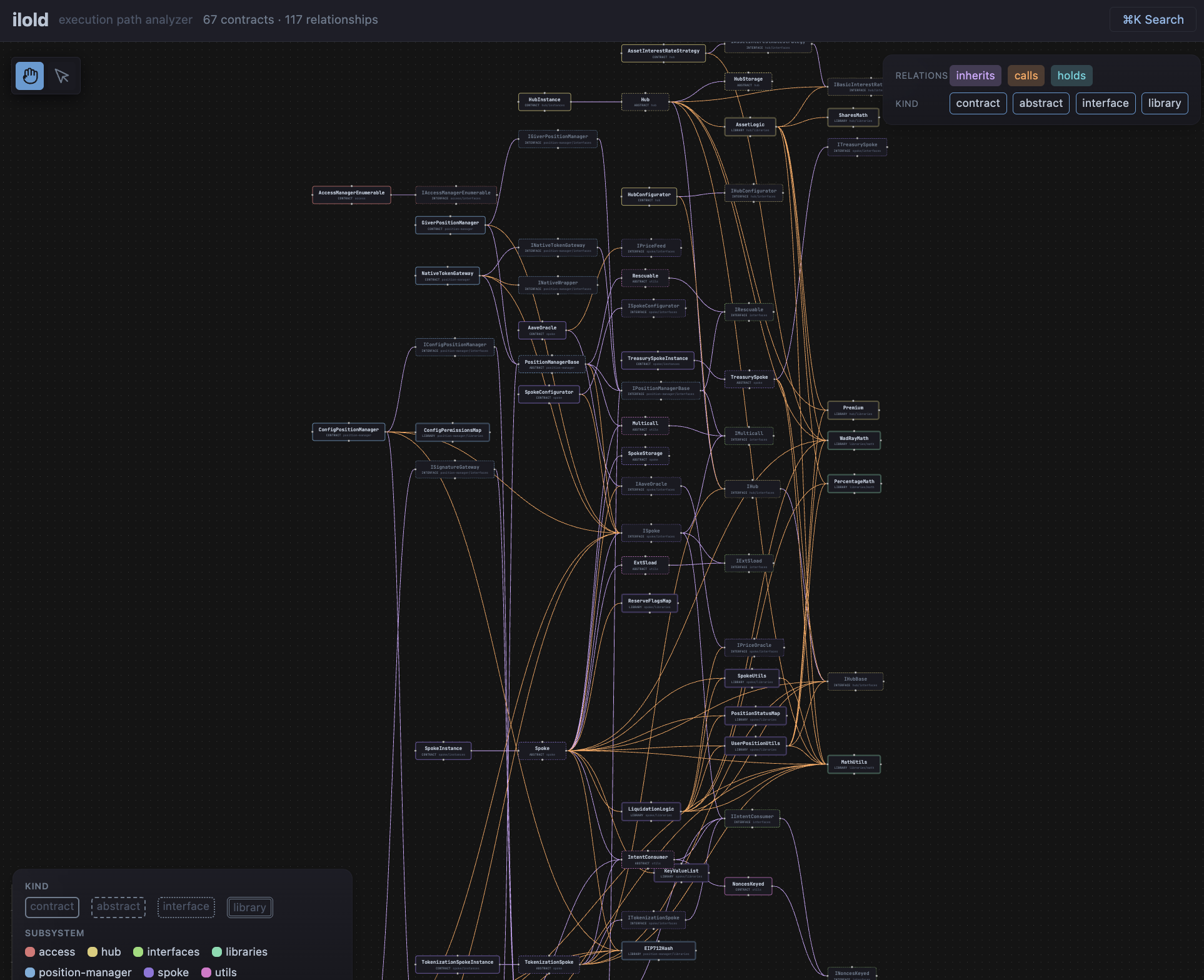
ilold-evm indexes Solidity projects into graph-backed review state: dependency graphs, call paths, traces, slices, sessions, findings, report export, and MCP tools for Claude Code, Codex, Cursor, and security automation.
Current Solana workbench
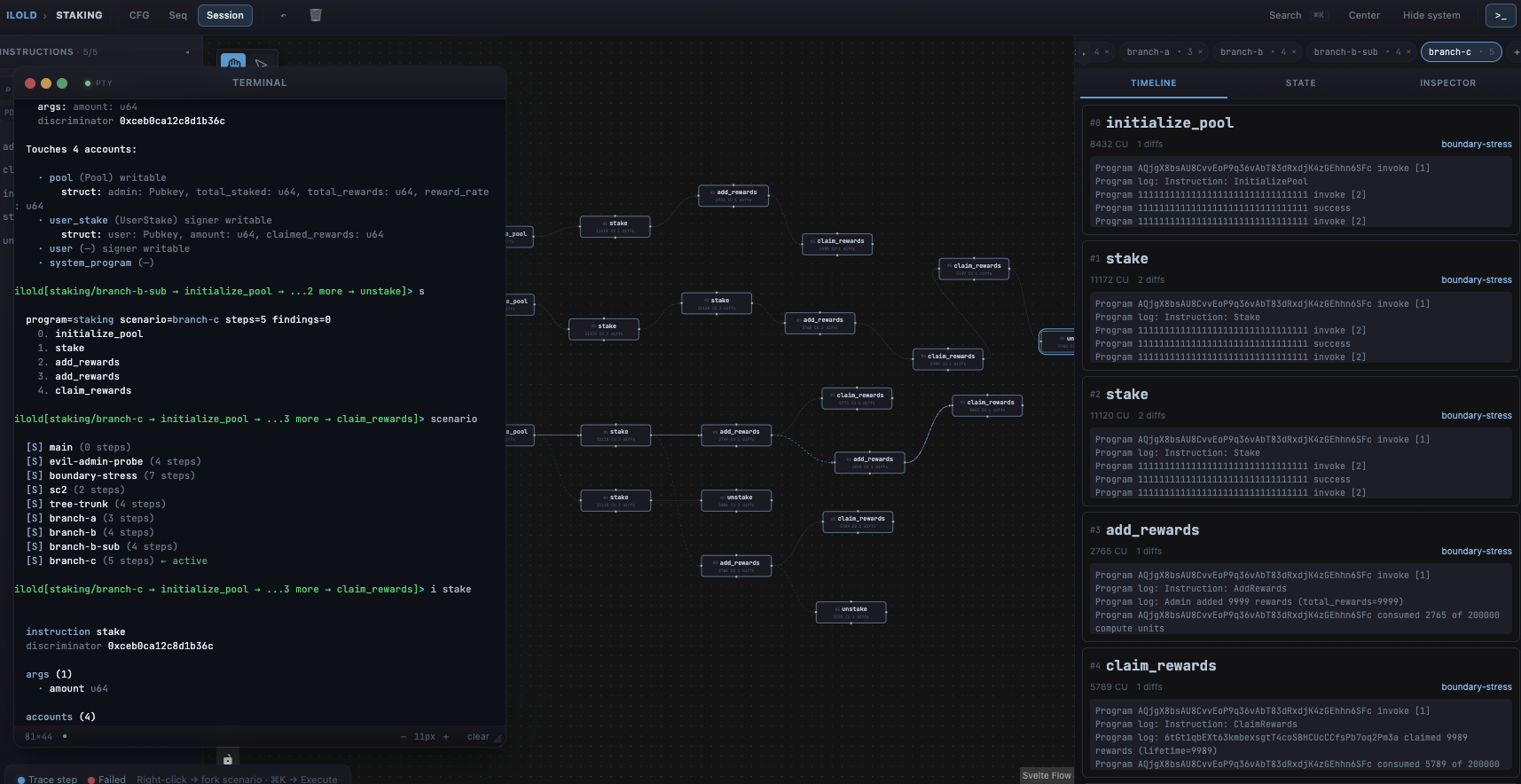
The Solana workbench adds execution context: LiteSVM scenarios, account diffs, scenario forking, CPI paths, Markdown export, and typed MCP tools for repeatable review workflows.
Product proof
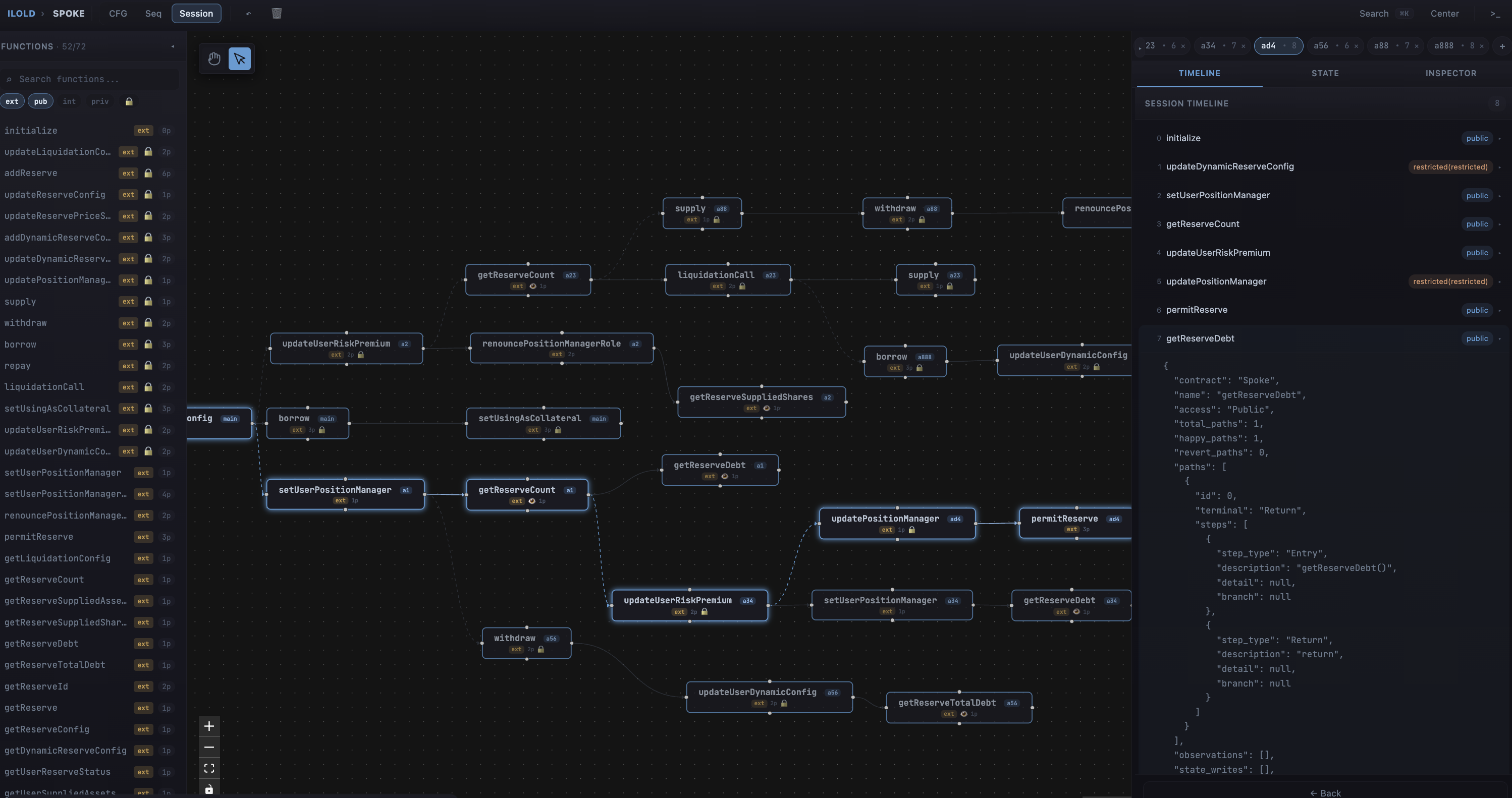 source spans
Explore code relationships, paths, and slices as reviewable graph state.
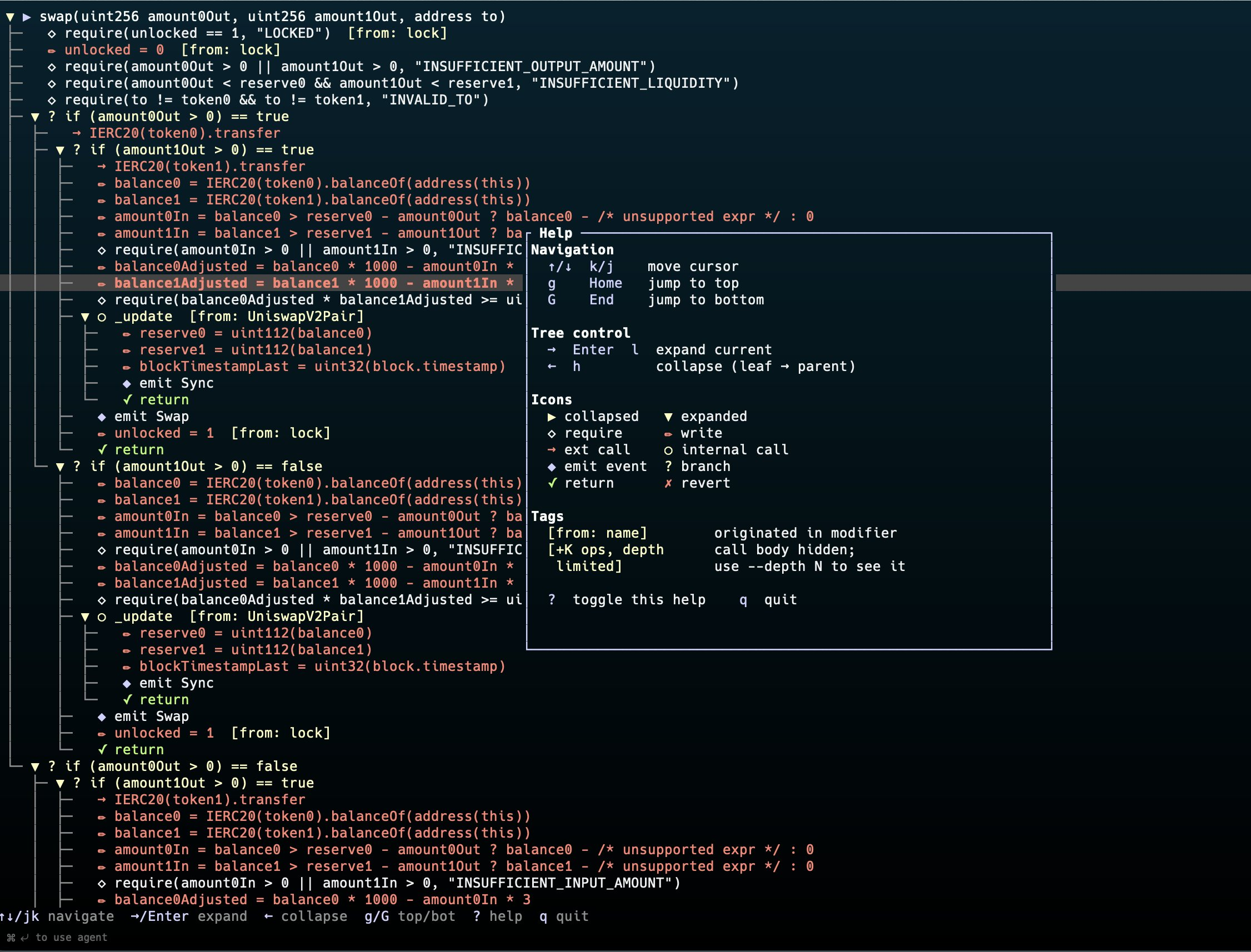 trace proof
Evidence trails that explain where claims come from.
report context
Sessions, context, reports, and MCP agent tools in one workspace.
Web2 precedent
Knowledge graphs, code property graphs, and attack-path graphs are becoming the context layer for AI-assisted security. CodeQL made code queryable. Joern made vulnerability research graph native. BloodHound made attack paths operational. ilold brings that evidence-first model to EVM and Solana security through MCP.
How it fits
The goal is not to replace Slither, fuzzers, manual auditors, or AI agents. The goal is to connect their outputs into a graph that can be reviewed, queried, and reused across the audit lifecycle.
ilold
ilold is open source and actively in progress. Use it as the graph-backed context layer for EVM and Solana smart contract review, audit preparation, AI agents, and fix proof.